


2018 School Spending Survey Report
The Great Unknown: Daniel Handler Interviews National Book Award-Winner Judy Blundell
Before she snagged the National Book Award, Judy Blundell was one of publishing’s best-kept secrets
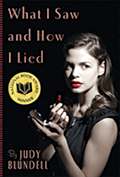 If you haven’t heard of Judy Blundell until recently, join the club. For nearly 20 years, Blundell has toiled in anonymity, turning out more than 100 mysteries, romances, and media tie-ins under various pen names, such as Jude Watson. But in mid-November, the writer-for-hire was suddenly shoved into the spotlight. That’s when What I Saw and How I Lied (Scholastic, 2008)—the first title Blundell has put her name on—won the prestigious National Book Award for Young People’s Literature. The novel—an anything-but-ordinary tale of romance, betrayal, and murder set in 1947—follows 15-year-old Evie and her family as they seek a new start in Florida. SLJ invited Daniel Handler, chair of the most recent National Book Award committee, to interview the winner. After all, we figured, who better than the author of the best-selling “Lemony Snicket” books to unearth Blundell’s darkest and, perhaps, most unfortunate secrets? And besides, we were dying to know which member of his committee fell asleep during an important conference call—something Handler alluded to in his National Book Award speech.—Rick Margolis Daniel Handler (DH): There’s something so strange about interviewing the person to whom you’ve given the prize. It seems almost like I’m patting myself on the back to congratulate you.
Photograph by Matt Peyton
Judy Blundell (JB): I thought you were going to say, “There’s something incestuous about it,” and I was going to say, “You know about that, don’t you?” DH: Don’t I always. But congratulations on having written such a fine book, and I do hope that the National Book Award gives it the exposure to which it is entitled. JB: Thank you. It was a huge shock, of course. DH: You’ve written such a large number of books on assignment under various pseudonyms that in your acceptance speech you said you couldn’t come up with the exact number. Can you talk a little bit about that, and why you decided to take the big step to write your own self-induced book? JB: I was very underconfident when I was younger. I really felt that writers were these exalted beings, and it would just be way too much hubris for me to ever be one. I got a job as a temp at Simon & Schuster, and I started writing on the side. Through knowing editors, I made my way into publishing through the back door, as a writer-for-hire and doing media tie-ins. If you’re good at it and you meet your deadlines and you’re not a scary person, you can make a living that way. I did that for many years, while I wrote other things on the side. I was working on an adult novel for many years that never got published. So when I wrote What I Saw and How I Lied, I really did not expect it to be a huge break for me, and I didn’t think I was going to put my name on it. It was really my editor who said, “You need to put your own name on this book, because it’s different.” DH: Did your long career of writing on assignment help shape the book? JB: Writing on assignment, you learn to live in fear of having a reader put down your book, and you learn how important it is to keep a plot moving. I’d say that’s probably the most important thing I learned, because I really live in horror of boring a reader. Not that I would put a cliff-hanger at the end of every chapter, like in thrillers or adventure books, but I felt very conscious of writing a page-turner as well as writing a good book. DH: One of the things that excited our panel about your book was the fact that it was diverting entertainment as well as having a real serious purpose. I always think that’s part of the tightrope of writing for children. In What I Saw, you dove into the world of noir, which is scarcely used in children’s literature, except in parody form. Was that because you liked that form, or were you excited that it was a new thing to bring to children’s lit? JB: I wasn’t consciously using noir as an inspiration from the beginning. It didn’t really occur to me. What I was more focused on was the mood of 1947 and the postwar mood in America, which is often seen as this tremendously exciting and positive time. Yet when I went back and looked at books that were being written at that time—like James Jones’s Some Came Running—I found they were very dark and full of anxiety. If you read Laura Hobson’s 1947 novel Gentlemen’s Agreement, the fact that we had just fought World War II and found out what we found out and yet there was still so much anti-Semitism in the United States, that was really interesting to me, too. And obviously I wove that into my book. DH: Let’s talk about Evie. She’s a very complex character. JB: She was raised in an urban environment by a single mother. So she had to have a certain amount of street smarts growing up. Yet at the same time, the period of World War II was very romantic. I listened to a lot of music while I wrote this book, and it was so romantic. Love was going to save the world. People were marrying and there was the agony of parting from your loved one—of soldiers going overseas—and all of that must have really influenced Evie, even though she had to have been a very pragmatic person. Also growing up without a father made her more romantic, because she was always looking for that sort of love. The plot really turns on all of that emotion inside of her—how she reacts to issues like first love and betrayal and having a stepfather and wanting to believe in him no matter what. DH: I also listen almost constantly to music that’s appropriate to whatever kind of book I’m writing. How else did you immerse yourself in that time? JB: I tried to filter out the contemporary world. I tried not to read anything contemporary except the newspaper. I really like original source materials. My mother had saved newspapers during World War II—from December 7, 1941, all the way up to the Japanese surrender. I actually touched those newspapers, which was really wonderful. I looked at the advertisements and what was on the front pages. I also used Google to look at original newspaper articles and transcripts whenever I could. And then there were things that never made it into the book. I had my mother teach me the Lindy. As she taught me the basic steps—I’m a terrible dancer, but the Lindy’s pretty easy—I was looking at the way she moved. My mother’s in her 80s, and I realized that they had a different way of moving back then and a different rhythm in their speech. It’s impossible to truly capture it, because I wasn’t alive then, but just that act of learning the Lindy made me really think about the whole rhythm of a culture and how that changes during different eras. DH: Did you have the idea for the story first? Or did you want to inhabit that particular time period first and then find a story? JB: I had the idea for the story first. I knew that it took place after a war. So originally I toyed with the idea of placing it in the ’20s, but then it became clear to me that it was post-World War II. When you’re planning a book, there are all these threads, and it seems impossible to weave them together. They’re just a mess, they’re a tangle, and you don’t know which one to pull. So I had the character of Evie, and I had certain elements of the story in place. But it was really the moment when I read about the gold train [which carried valuables that had been seized by the Nazis] that I was able to put a frame around the threads and see that they actually made a picture. DH: How did you come to work with your editor, David Levithan? His name was on something like 60 of the submissions that we read, and he also wrote a book that was submitted for consideration. Early in the process, we were joking that his name was going to be somewhere on the National Book Award, and sure enough, it kind of is. JB: I’ve been with David for a long time. I started with him on a “Star Wars” book long ago and... DH: In a galaxy far, far away? JB: In a galaxy far, far away. We did a few mysteries together, but primarily we’ve worked on the “Star Wars” series. He’s a really genius editor, and he’s just so much fun to work with. When we first started together, he wasn’t yet writing, but I always knew he would write. He is the most amazingly prolific, hardworking person. I don’t know when he sleeps, but I’m not allowed to say that to him anymore, because I say it in such an accusatory, snotty way. DH: It’s never good to ask your editors about what they do in bed, anyway. JB: True. So who fell asleep on the phone? That’s what I want to know. DH: You know, I almost didn’t say anything about that in my speech, because she fell asleep for a perfectly good reason. It was Angela Johnson who fell asleep on the phone. In the last couple of months of our process, she was hugely active all around Ohio, campaigning for Barack Obama. So she had been up all night, calling people, and then had driven three hours to get home for the conference call. JB: But you still brought it up. DH: I still brought it up, because it was fun to talk about. I don’t know. [Standing at the podium] I was most self-conscious, because I thought there were five extremely tense people in the audience. JB: No, four, because one of them didn’t think she was going to win. DH: Well, you should have been tenser. JB: I ate my dinner. I had a bellini. I was having fun. Until you announced my name and terror struck my heart. DH: I promise I’ll never do it again. JB: No, don’t say that. DH: I’ll never give you the National Book Award again, as God is my witness.
Added To Cart
RELATED


RECOMMENDED
CAREERS
The job outlook in 2030: Librarians will be in demand
CAREERS
The job outlook in 2030: Librarians will be in demand
ALREADY A SUBSCRIBER? LOG IN
We are currently offering this content for free. Sign up now to activate your personal profile, where you can save articles for future viewing
ALREADY A SUBSCRIBER? LOG IN
Thank you for visiting.
We’ve noticed you are using a private browser. To continue, please log in or create an account.

Add Comment :-
Be the first reader to comment.
Comment Policy:
Comment should not be empty !!!