


2018 School Spending Survey Report
An SLJ Exclusive Interview with Erik J. Brown
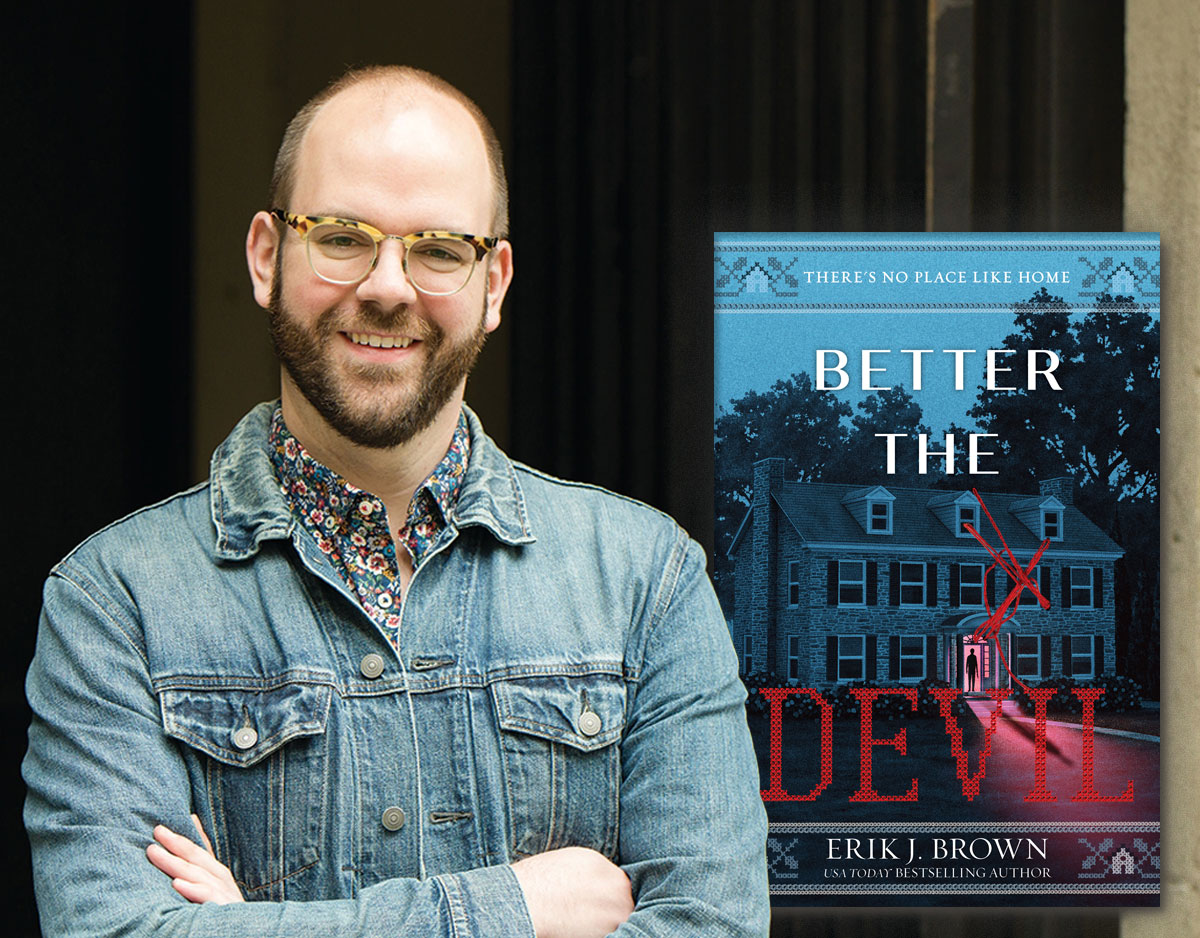
YA author Erik J. Brown speaks with SLJ about writing across genres, the value of found family, and the safety in thrillers.
 |
|
Photo by Jennifer Buhl |
Teens want to relate to the books they're reading, says YA author Erik J. Brown. "They want books they can see themselves in and to experience an exciting story that captivates them from beginning to end. Teens want authenticity, and that has to be reflected in the words and the worlds of the books they pick up."
Brown's latest novel for teens, Better the Devil, publishes January 20th from HarperCollins/Storytide. In this interview, which has been edited for length and clarity, he speaks with SLJ about writing across genres, the value of found family, and the safety in thrillers.
1. You write across several genres, including post-apocalyptic and contemporary. Your latest, Better the Devil, is a thriller. How was the experience of writing this one different from your other writing experiences, if at all?
It’s going to sound strange, but I felt both more confident and unsure at the same time. I was so confident while writing the book. I was writing for over 10 years before I even sold my debut, All That’s Left in the World, so by now I know what my strengths are when I write: dialogue, character, and tense action scenes.
It wasn’t until I finished Better the Devil that I started to get nervous about whether or not the heart of the book would be clear enough for readers. Maybe that’s just a natural way of thinking when authors continue to be published? Every time I sit down to write my next book, I’m probably going to think the last one was a fluke. But getting early reviews that express exactly what I was hoping people would take from the book has made me so much more optimistic. Now I’m confident this book will traumatize my readers in an exciting new way!
2. Why do you think teens are attracted to thriller novels?
I think teens who like to read in general are already the ones looking to make trouble. They’re the teens who noticed earlier than most how the world is presented to them, and that things aren’t adding up. Thrillers are nothing but trouble. They’re a safe place for the rebels to explore the dangers of society and, more importantly, how to get out of it unscathed…hopefully. And of course, some of us also love the adrenaline rush.
3. Where did you get the idea for Better the Devil?
The French! There’s a serial imposter who—as a 23-year-old, balding French man with brown hair and brown eyes—managed to convince the Spanish Civil Guard, Interpol, the FBI, and a family that he was actually a 15-year-old blonde boy from Texas who disappeared eight years earlier. (George Santos wishes he could!). I saw a documentary on the case and became curious about the family who accepted this stranger into their home. What kind of mental gymnastics did they have to do in order to believe this person? And I wondered about the imposter. What would make someone steal a child’s identity and lie to this family, to give them false hope? The idea eventually became a thriller about unconditional love.
The "Nate" character has never felt love from his parents, who tried to change who he was and made him run away. When he tells the police he’s this Nate Beaumont child, he expects to be able to use it as a distraction so he can get away from them again. But when the parents show up and take him home, his history with his own family makes it difficult to trust them. Not to mention, they’re the lead suspects in Nate’s disappearance.
4. What do you hope readers will take away from the story?
You mean aside from nightmares, right? Found family is, without a doubt, my favorite trope. So many queer kids in the world today are experiencing what it’s like when their families turn their backs on them because of how they were born. These are people who are supposed to love these children unconditionally. I especially want queer teens to know that we can choose our families. We choose the people we want to keep in our lives, who will love and support us.
For the adults reading the book, I’d love for them to reexamine their own thoughts on family. In an ideal world, some parent out there who doesn’t like that their kid is queer would pick up this book ready to be mad at me and give all of my books one-star reviews, saying I’m a bleeding-heart liberal queer. But then they actually read it…and something in the narrative connects with them that makes them realize they’re being ridiculous. Granted, that’s a longshot that will most likely never happen, but wouldn’t it be nice if it did?
So if there’s anything else adults might take from reading the book, I hope it’s that they can help queer kids who are turned away from their families, just by reminding those kids that they’re loved in this world. And that trauma doesn’t stop when they grow up. There are plenty of adults who still struggle with knowing that their parents will never love them because of who they are. Maybe that’s an easier goal: for the teens reading this book now to grow up and remember how important it is to love unconditionally.
5. Do you have any advice or encouraging words for librarians as they navigate their profession in these troubling times?
Librarians are some of the few people who are capable of changing minds. Everything online uses algorithms so kids who go on social media will only have the echo chamber of their already established world. They like and interact with the things they already know and believe. A librarian who recommends a book to a child might be doing so outside of that echo chamber. They might be giving that child their first look into a different world. It's a job that I’m grateful exists every day. And of course: Illegitimi non carborundum.

Added To Cart
RELATED


RECOMMENDED
CAREERS
The job outlook in 2030: Librarians will be in demand
CAREERS
The job outlook in 2030: Librarians will be in demand
ALREADY A SUBSCRIBER? LOG IN
We are currently offering this content for free. Sign up now to activate your personal profile, where you can save articles for future viewing
ALREADY A SUBSCRIBER? LOG IN
Thank you for visiting.
We’ve noticed you are using a private browser. To continue, please log in or create an account.

Add Comment :-
Be the first reader to comment.
Comment Policy:
Comment should not be empty !!!