


2018 School Spending Survey Report
We Must Remain Vigilant: An open letter to publishers | Opinion
Lee & Low publisher and co-owner Jason Low says publishers must continue the commitment to diverse titles while also contributing to the larger fight for the freedom to read.
Large and small publishers alike are experiencing turbulence from the hurricane-level headwinds created by book bans. In an industry known for razor-thin profit margins, it is not a stretch to say that book bans are playing havoc with our businesses, particularly for those who sell into the school and library markets.
Let’s dispense with the fantasy that having a book challenged is free marketing—it isn’t. Having a book challenged keeps the book off the school library shelves, making the book inaccessible until the challenge is lifted. I have heard firsthand that educators and librarians who are preemptively looking to avoid trouble will self-censor books that they feel may stir controversy, which is problematic since these numbers are never included in annual statistics. Soft censorship means that the actual number of books being challenged is much higher. This is one of the reasons why the 2024 book ban numbers are lower than 2023, but still abnormally high.
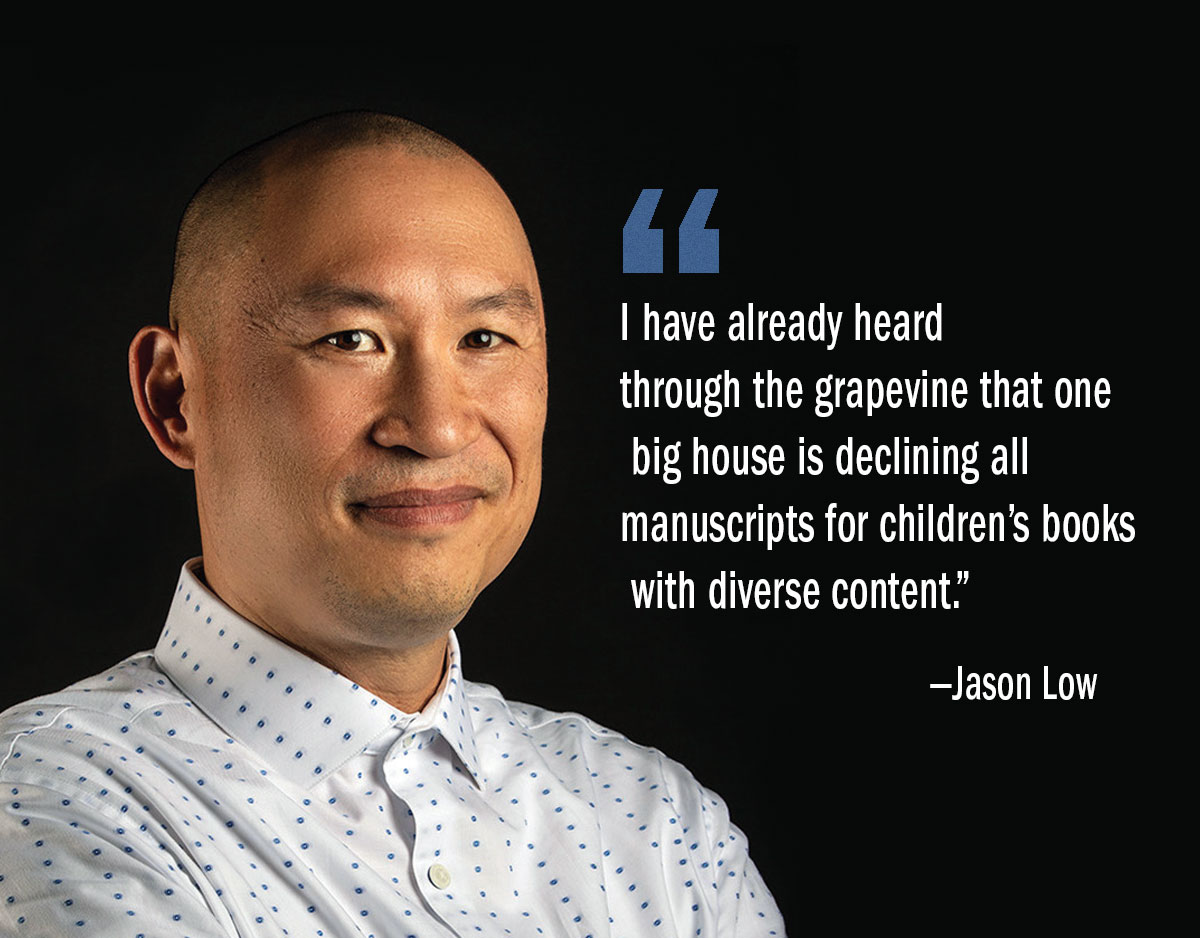
This bad news is repeated ad nauseam in the news and on social media platforms, which also report continually updated lists with the number of books banned. How does this play on our minds as publishers? Does seeing endless links of doom and gloom plant a seed in our subconscious that the battle is already lost? I have already heard through the grapevine that one big house is declining all manuscripts for children’s books with diverse content.
Fighting book bans is not quick, easy, or straightforward, but we cannot tune out. I have not personally met anyone in favor of book bans within the publishing industry or in the community. I usually encounter people with three different reactions to book bans. The first group is in denial. These people know about book bans but do not feel they greatly impact their lives. They choose to ignore them and hope that they will eventually go away on their own. The second group is livid but are searching for solutions on their own. They are looking for someone to tell them what to do. And the third group is actively working to push back against censorship.
As publishers, we need to remain vigilant. As we head into a new year, we must lead the way, help those who are in denial, or join forces with those actively fighting the bans.
I would love to post a link where we could all go, find one task to accomplish, and that would be that. But there is no such silver bullet. Instead, I hope to encourage us to turn our attention away from the doom and gloom and focus on the very real actions and victories happening in an area we can impact directly.
The American Library Association (ALA) website lists Adverse Legislation in the States. Scroll down and check out Adverse State Legislation 2025 to find the bills proposed to protect the freedom to read and their status. As you will see, some have been vetoed, but others made it to the finish line and were signed into law. Still many others are working their way through the state House and Senate committees as people in government, plus their constituents, are working to protect the freedom to read for us and our children.
There are 10 states that have passed legislation to ban book bans. Do you want a tangible example of work that remains unfinished? Look at New York, where book publishing calls home. Assembly Bill S1099 is making its way to the governor’s desk for her signature but is not there yet. What action can we take to help push this through? Publishers routinely send royalty statements to their authors and illustrators. Why not include a call to ban the [book] bans, along with a link to locate representatives? We did. Now picture hundreds of letters flooding New York Governor Kathy Hochul’s inbox calling for her signature on this important bill. And just like that, 11 states have now banned book bans!
Outside of New York, individuals can visit the ALA site and find their state in the table. It provides the bill number to reference when they write or call their local representatives. For places where a bill made it to the governor’s desk and was vetoed, constituents can contact the governor to voice their displeasure. If enough people do this, elected officials can be persuaded to sign these bills into law or reconsider an ill-thought decision. The 2026 midterm elections are less than a year away. Local, state battles are where we can win, and the successful defense of our right to intellectual freedom can lead to more wins.
A Freedom to Read bill may seem trivial in the scheme of things, but a librarian told me that these laws matter. It is a miserable fact that when one’s job is on the line, librarians and educators can be easily bullied to comply with book bans. This is why a law that prohibits book bans gives librarians and educators the teeth they need to keep books on the shelves and defend themselves and books.
As publishers, we must support individuals by sharing the best information available to give people the knowledge and tools to act. Exercising our civic duty as a community is critical. As a collective voice, we can defend the lifeblood of our industry.
It is safe to assume that those who work in publishing love books, but we no longer have the luxury of our jobs ending with the work we are paid to do. We all must do more to help protect the librarians and educators on the front lines. The people who conduct story times need us. As we check off each state that passes a ban on book bans, we start to accumulate wins and beat back these attempts to limit our freedom.
How do we measure progress?
One state at a time.
Locate your representatives to call or write them about the need to ban book bans: https://uniteagainstbookbans.org/toolkit/#decision-makers. ■
Jason Low is publisher/co-owner of Lee & Low Books (leeandlow.com), the largest multicultural children’s book publisher in the United States.

Added To Cart
RELATED


RECOMMENDED
CAREERS
The job outlook in 2030: Librarians will be in demand
CAREERS
The job outlook in 2030: Librarians will be in demand
ALREADY A SUBSCRIBER? LOG IN
We are currently offering this content for free. Sign up now to activate your personal profile, where you can save articles for future viewing
ALREADY A SUBSCRIBER? LOG IN
Thank you for visiting.
We’ve noticed you are using a private browser. To continue, please log in or create an account.
Add Comment :-
Be the first reader to comment.
Comment Policy:
Comment should not be empty !!!