


2018 School Spending Survey Report
Olympic Lessons in the Library
Kansas elementary school librarian Amanda McCoy teaches a research unit using Olympic sports.
 |
Courtesy of Amanda McCoy |
As Olympic Fanfare played, students entered Amanda McCoy’s library confused. McCoy didn’t normally play music in the library. But wait—this song sounded familiar.
“It’ll get to a part in the song where one or two kids [will say], ‘Oh, I know this. They play this during the Olympics,’” she says.
That’s right, the teacher librarian at Sunflower Elementary School in Lawrence, KS, tells them. “We are talking about the Olympics.”
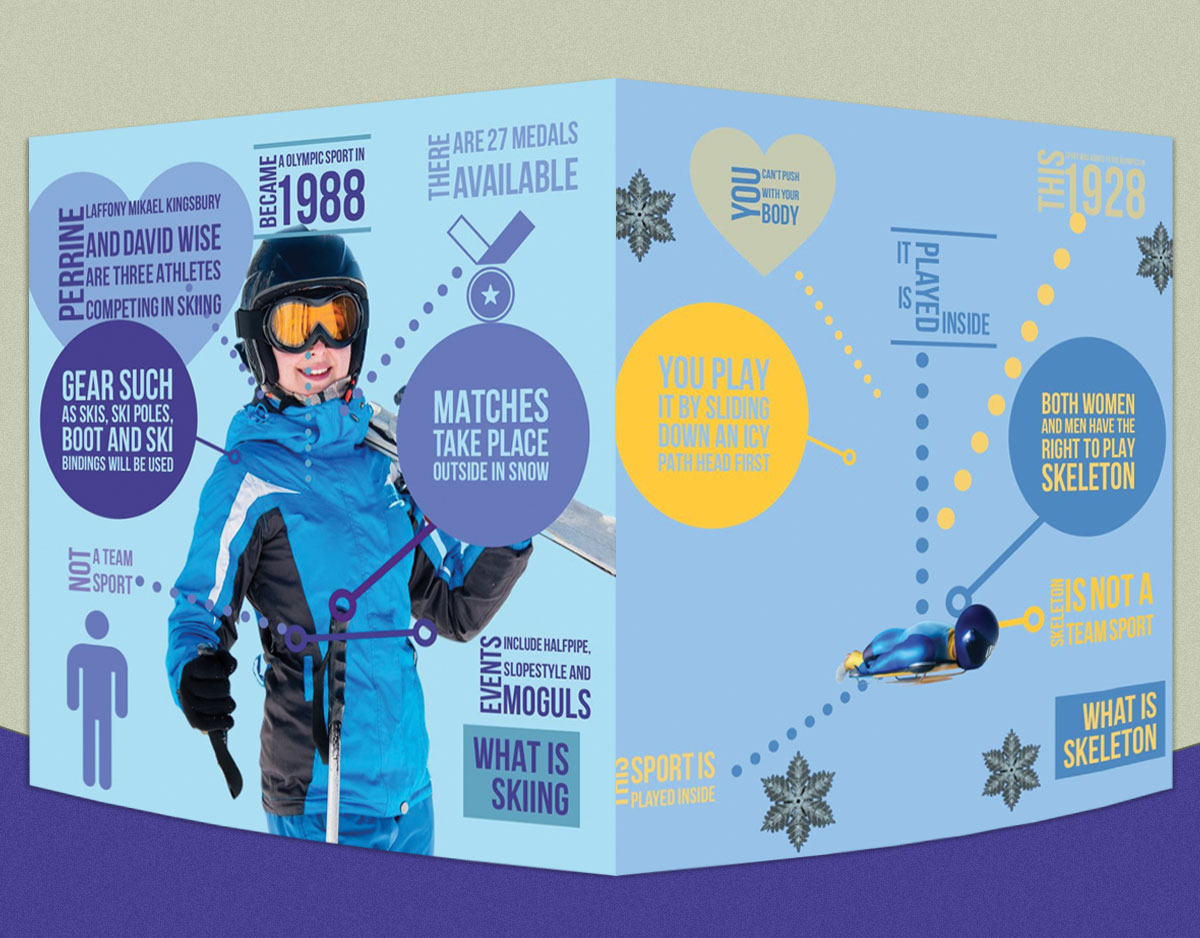
In truth, McCoy is about to start a multi-day unit that uses the Olympics to teach research and infographics.
“I saw an opportunity for our students who are really excited about sports to connect that with research,” says McCoy. “I also noticed that my students needed some more experience navigating different websites, so I created this unit to kind of tie all those things together.”
The program began with the 2022 Winter Olympics in Beijing, and she will once again be teaching the unit to third, fourth, and fifth grade students this year.
On Day 1, McCoy has students look at the official site for the Olympic Games. They discuss any new sports and then the kids are sent around the library with a sheet showing just the Olympic icons on it. They must find cards placed around the library that have the icon and sport name and write down the sport next to the icon on their sheet. Anyone who finishes with time left goes back to the Olympics website and writes down the venue for each of the sports.
Day 2 differs a bit depending on the grade. Third graders are given a list of sports, and watch 10- to 20-second videos of each sport and then write down what it is. Fourth and fifth graders are asked to write down all the sports they remember from the day before and then watch the clips and identify what is being played.
“Some of the kids know right away; for others, it’s a complete mystery,” says McCoy. “Usually we don’t have anybody that can identify [Olympic event] skeleton right away.”
After that, students are directed to a website McCoy created about the Olympic sports with videos and links to the official Olympics site and NBC’s Olympics site as well.
“I am really trying to hit hard that we can find information when it is presented in different formats,” she says. “This [lesson] comes at a time when we have already done a couple research projects in the year, when they are looking at some online encyclopedias, where the information is in the same place every time [and] they know how things are formatted. My goal with this is them looking at two different websites where I promise them the information that they need is there, but the formatting is different. They’ll have to learn to navigate to find the things that they need.”
Students must choose a sport to learn more about and answer questions on a research sheet they are given.
“They’re digging through to find some basic information about the sport: When did it premiere in the Olympics? Who plays it, men or women or mixed? Where is it played? What gear is used? How many medals are awarded? Can you name any athletes competing?” McCoy says. “We don’t live in a place where a lot of Winter Olympic sports are played, so it’s new to a bunch of kids, which is always really fun.”
The students start their research independently, but once some finish early or others lag behind, McCoy will group kids researching the same sport, matching those who may need more help with “high flyers” who have already successfully found a lot of the information.
On Day 3, they complete the research sheet. Then McCoy introduces creating an infographic. When she began the unit, she used Adobe Express, but her district no longer supports the software, so she uses an iPad app called Freeform. Canva also works well, McCoy says, because they have a lot of icons, color, text, and images to add.
The kids begin by making an infographic about themselves that requires a picture of them in the middle and some facts about them around the photo. On the fourth day, they take their Olympic sport research and create an infographic on it with a photo of the sport in action in the center. McCoy will give third graders specific instructions on what to include: who won the last gold medal in the sport, the venue, etc. The fourth and fifth graders are asked to use interesting facts about the sport and something that other people might not know about it.
The unit’s impact doesn’t end with the completion of the infographic. Students will come to the library to tell McCoy they watched their sport with their family the night before—and the interest continues at checkout time.
“I’ll have some kids that are more interested in these sports they haven’t heard of before,” she says. “I have had to do some collection development to support this unit.”


Added To Cart
RELATED


RECOMMENDED
CAREERS
The job outlook in 2030: Librarians will be in demand
CAREERS
The job outlook in 2030: Librarians will be in demand
ALREADY A SUBSCRIBER? LOG IN
We are currently offering this content for free. Sign up now to activate your personal profile, where you can save articles for future viewing
ALREADY A SUBSCRIBER? LOG IN
Thank you for visiting.
We’ve noticed you are using a private browser. To continue, please log in or create an account.

Add Comment :-
Be the first reader to comment.
Comment Policy:
Comment should not be empty !!!